The Mineral Film Problem: How to Groom Around Hard Water Without Calling a Plumber
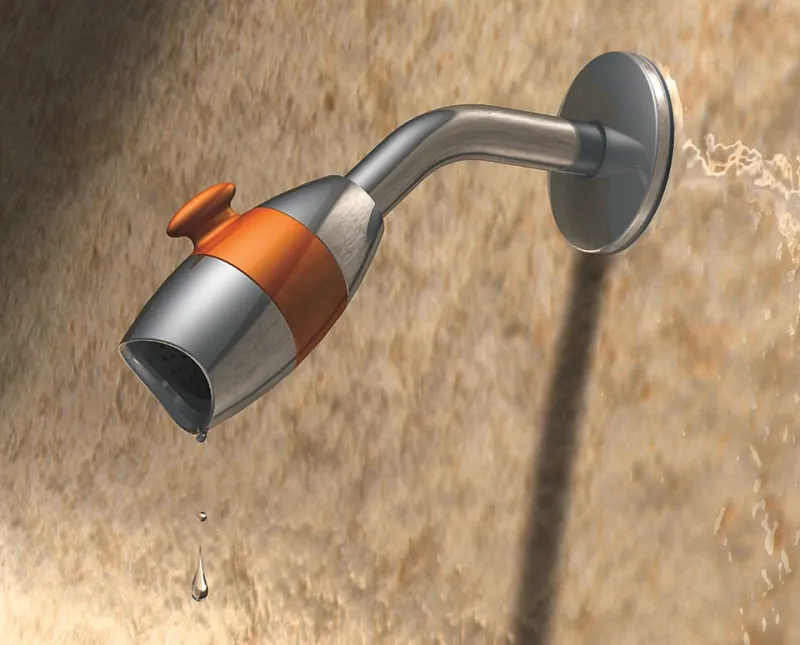
Photo: Greg L, CC BY-SA 3.0, via Wikimedia Commons
That tight, squeaky-clean feeling you get stepping out of the shower is not actually clean. It is the sensation of mineral residue and stripped oil sitting on your skin, and if you live in one of the hard-water belts that run through the Midwest, the Southwest, and much of Florida, you have probably spent money on better cleansers while blaming the wrong culprit.
Hard water is tap water with a heavy dissolved load of calcium and magnesium. It is fine to drink. It is genuinely bad at rinsing things. Those minerals bind to the surfactants in soap, which means weaker lather, more leftover product, and a film that dries down into the dull, grippy feeling most guys assume is just their skin. Your beard gets the same treatment: minerals coat the hair shaft, the cuticle lifts, and by mid-afternoon you are running a hand through something that feels like a push broom.
Here is how to figure out whether that is your situation, and what to do about it when you cannot rip out the plumbing.
The Signs Are Boringly Consistent
Start with a walk around the bathroom instead of a shopping cart. Hard water leaves a very specific signature:
- Soap and shampoo never lather the way they do in a hotel bathroom
- Glasses come out of the dishwasher spotted, even with rinse aid
- White crust builds on the showerhead, faucet, and the base of the soap dish
- Skin feels tight and faintly itchy within 20 minutes of toweling off
- Beard hair feels wiry right after washing, then soft again after two days of not washing it
- A brightening serum that worked in October seems to do nothing by December
- Your razor drags even on a fresh blade
Three or more of those and the water is worth investigating. None of them are emergencies. All of them are annoying.
Two Tests You Can Run This Weekend
The jar test. Fill a mason jar about a third of the way with tap water, add a few drops of liquid dish soap, and shake hard for ten seconds. Soft water throws thick, stable suds. Hard water gives you a thin, curdled lather and cloudy water. It is not precise, but it is free and it takes a minute.
The actual report. Under the Safe Drinking Water Act, every US community water system has to publish an annual Consumer Confidence Report, usually by July 1. Search your utility name plus 'water quality report,' then look for hardness listed in milligrams per liter or grains per gallon. Roughly: under 60 mg/L is soft, 60 to 120 is moderately hard, 120 to 180 is hard, and anything above 180 is the kind of water that ruins kettles. In grains, anything over 7 is firmly in hard territory.
If you are on a private well, or your utility report is vague, a $15 pack of hardness test strips from any hardware store will settle it in 30 seconds.
The Uncomfortable Truth About Shower Filters
Most shower filters in the $30 to $60 range are carbon and KDF media. They are genuinely good at reducing chlorine, sediment, and some metals, and chlorine reduction alone is worth the money if your skin runs reactive. What they do not do is remove calcium and magnesium. Only ion exchange softening does that.
This matters because the packaging is not always honest about it. Salt-free 'descalers' and 'conditioners' change how minerals behave rather than removing them, and the results are debated even among people who install them for a living. If a $40 showerhead promised you soft water, it promised you something it cannot deliver. Buy it for chlorine reduction and stop expecting miracles.
Where a real softener exists — a whole-home unit or a portable ion exchange tank — it works. Everything else is mitigation, and mitigation is still worth doing.
Free Fix Number One: Change Your Rinse Order
This costs nothing and helps more than most guys expect. Wash your hair and body first, then your face and beard last, so you are not rinsing cleanser off your face with water that is already carrying shampoo residue. Rinse with your hand, not a blast, and finish with 20 seconds of cooler water than the rest of your shower. The cool finish does not shrink pores — that is a myth — but it does reduce the amount of soap film left behind and calms skin that is already irritated.
Pat dry with a clean towel and put moisturizer on while your skin is still slightly damp. In hard water, the window for locking in moisture is shorter because the film interferes with absorption.
What Actually Removes the Minerals
Chelating ingredients grab minerals and hold them so they rinse away. On a label, look for EDTA, phytic acid, or citric acid high in the ingredient list, or for products marketed specifically for hard water. Use a chelating shampoo or face wash once or twice a week — not daily, because they are not gentle on hair or on a healthy skin barrier.
For beards, a diluted apple cider vinegar rinse (one part vinegar to four parts water) once a week, worked through the hair and rinsed after two minutes, does a decent job of stripping buildup. Follow it with beard oil on damp hair, not dry, so the oil actually spreads instead of sitting on top.
And do not skip leave-in conditioner. In hard water, a rinse-out conditioner leaves less behind than you think.
A Weekly Routine That Survives Hard Water
- Daily: gentle, low-foam cleanser, cool final rinse, moisturizer on damp skin
- Twice a week: chelating shampoo or cleanser in place of your usual one
- Once a week: vinegar rinse for the beard, then oil
- Once a month: soak the showerhead in a bag of white vinegar for 30 minutes to clear the crust and restore pressure
If You Rent: What You Can and Cannot Do
A handheld filter head swaps onto most shower arms with a wrench in about ten minutes, no drilling, and the original head goes in a ziplock under the sink for move-out day. That is the single best renter move. A countertop or under-sink portable softener is the next step up if you are staying put for a while.
Ask the building manager for the water report too — large complexes sometimes already have a softener on the main line, which would save you the trouble entirely. And do not drill, caulk, or replumb anything without written permission. Losing a deposit over a $45 filter is a bad trade.
The short version: your products are probably fine. Your water is doing the damage, and once you know that, the fixes are cheap.